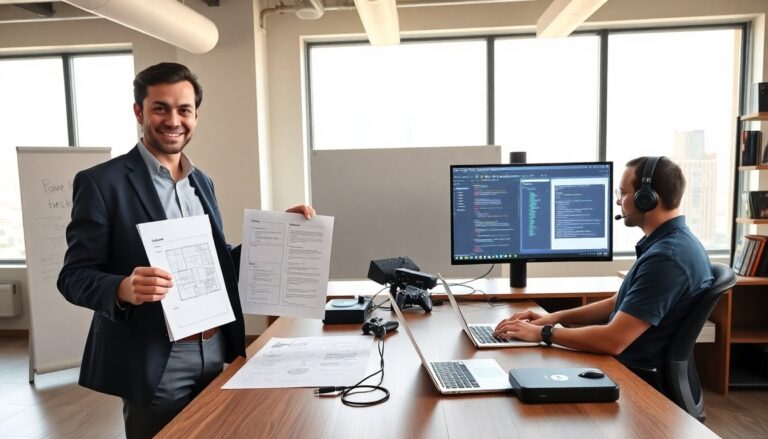


The difference between game design and game development often confuses new entrants. The difference between game design and game development lies in intent and execution. Design sets goals and player experience. Development implements systems, code, and assets. This guide explains the difference between game design and game development in clear terms. It compares roles, daily work, and career paths.
Key Takeaways
- The primary difference between game design and game development lies in intent: designers focus on player experience and rules, while developers implement code and systems.
- Game designers create prototypes, documents, and level layouts to guide player engagement, whereas developers build engines, features, and ensure stable game performance.
- Designers iterate quickly on ideas using tools like spreadsheets and level editors, while developers require more testing cycles using IDEs and debuggers to implement changes.
- Successful collaboration depends on clear communication and handoffs, with designers providing specs and developers delivering tested features.
- Career paths differ: designers specialize in user research and prototyping, while developers focus on programming and debugging, though cross-training can bridge these roles.
- Understanding the difference between game design and game development helps align team workflows, hiring, and project planning for better game creation.
Core Differences: Roles, Goals, And Deliverables
The difference between game design and game development shows first in roles. Designers define rules, loops, and player choices. Developers write code, create art pipelines, and build systems. The difference between game design and game development appears again in goals. Designers aim for player engagement and meaningful decisions. Developers aim for stable performance and feature delivery.
Designers produce documents, prototypes, and level layouts. Developers produce builds, engines, and tools. The difference between game design and game development matters for deliverables. Designers hand over clear specs, wireframes, and flowcharts. Developers deliver working features, bug fixes, and integration.
Teams measure success with different metrics. Designers track player retention, fun, and clarity. Developers track frame rate, memory use, and crash rate. The difference between game design and game development affects timelines. Designers iterate on ideas quickly. Developers need time to carry out and test.
Designers use feedback from playtests to change systems. Developers use automated tests to catch regressions. The difference between game design and game development also shows in required mindset. Designers think about human reaction and pacing. Developers think about algorithms, constraints, and optimization.
Hiring reflects these differences. Job listings for designers emphasize prototyping, level design, and user research. Job listings for developers emphasize C#, C++, engines, and version control. The difference between game design and game development guides how teams form and how projects plan.
Process And Tools: How Design And Development Actually Work Day‑to‑Day
The difference between game design and game development appears in daily tools. Designers use paper, spreadsheets, and level editors. Developers use IDEs, engines, and debuggers. The difference between game design and game development affects workflow. Designers sketch loops, balance numbers, and run playtests. Developers write code, integrate art, and fix bugs.
Designers prototype with simple builds or paper rules. Developers carry out prototypes in the engine and test performance. The difference between game design and game development shows in iteration speed. Designers can change values in minutes. Developers often need builds and test cycles.
Designers rely on analytics tools to read player behavior. Developers rely on profiling tools to read CPU and memory use. The difference between game design and game development shapes communication. Designers must describe intent clearly. Developers must document technical constraints clearly.
Tools overlap in modern pipelines. Both use version control, task trackers, and shared staging builds. The difference between game design and game development narrows when teams use modular systems and data-driven design. Designers can tweak data without new builds. Developers create the systems that let designers tweak data safely.
Daily meetings reveal practical differences. Designers present playtest results and new flows. Developers present build status and blockers. The difference between game design and game development becomes a rhythm of proposal and implementation.
Choosing A Path Or Working Together: Skills, Career Routes, And Collaboration Best Practices
The difference between game design and game development matters when people choose careers. Designers develop skills in user research, level design, and prototyping. Developers develop skills in programming, systems design, and debugging. The difference between game design and game development affects how professionals build portfolios. Designers show playable prototypes and design docs. Developers show code samples, engine mods, and shipped features.
People can switch roles with deliberate learning. A designer can learn scripting and ship small features. A developer can learn player psychology and create prototypes. The difference between game design and game development shrinks when individuals cross-train. Teams benefit from hybrid skills when they keep clear boundaries and responsibilities.
Collaboration demands clear handoffs. Designers produce specs with acceptance criteria. Developers carry out features and mark completion with tests. The difference between game design and game development reduces friction when teams use shared language and small milestones. Regular playtests and build reviews help both sides.
Career paths split by specialization and leadership. Designers can move to lead designer or creative director roles. Developers can move to lead engineer or technical director roles. The difference between game design and game development affects salary and market demand. Both roles remain essential and both roles offer growth.
Hiring managers should evaluate candidates on relevant work. Designers should demonstrate player-focused thinking. Developers should demonstrate technical problem solving. The difference between game design and game development becomes a practical choice based on interest, skills, and career goals.