
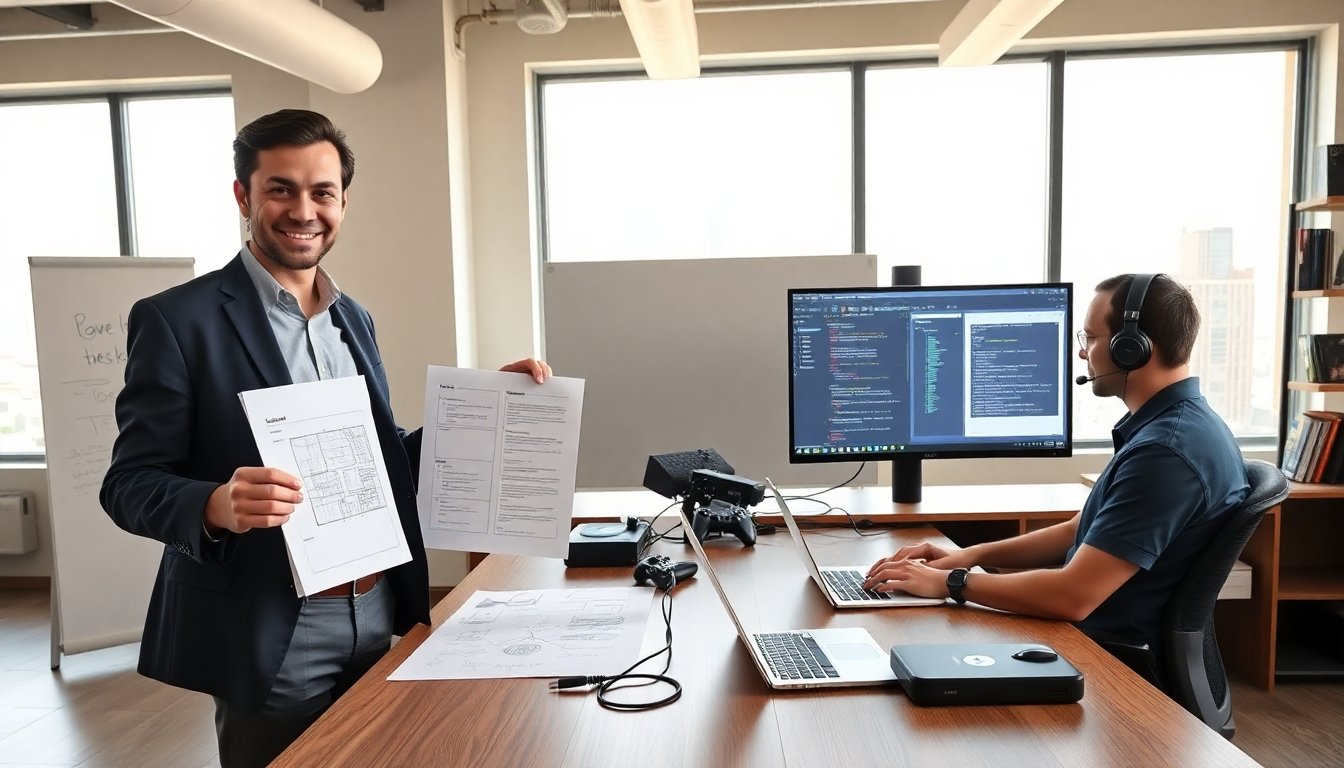

Game development vs game design is a common choice for people who want to build games. This guide compares the two fields, lists daily tasks, and points out the main skills. It helps readers decide which path fits their goals. The language stays clear and direct. Each section gives practical details people can act on.
Key Takeaways
- Game development focuses on coding and building the executable game, while game design centers on crafting rules, systems, and player experience.
- Designers rely on skills like systems thinking and rapid prototyping, using tools such as level editors, whereas developers require programming and optimization skills with tools like Unity and Unreal Engine.
- The two roles collaborate closely during production, sharing responsibilities like sprint meetings and player experience refinement.
- Career paths diverge with designers advancing toward creative leadership and developers toward technical leadership, each with differing salary expectations.
- Choosing between game development vs game design should align with individual strengths and interests, whether it’s coding or creating gameplay systems.
- Building a strong portfolio and engaging in networking through meetups or game jams enhances job prospects in both game development and game design.
Defining Game Development And Game Design: Roles, Responsibilities, And Day‑to‑Day Work
Game development vs game design often confuses new entrants. Game design focuses on player experience. A designer crafts rules, systems, and levels. They write design documents and wireframes. They test ideas and adjust pacing. They work with artists and programmers to refine play.
Game development focuses on building the executable product. A developer writes code, integrates assets, and fixes bugs. They choose engines, optimize performance, and carry out input and rendering. They run builds and maintain version control. They collaborate with designers to realize ideas.
A design lead defines game mechanics. A design lead schedules playtests and records feedback. A development lead assigns tasks and reviews code. A producer manages timelines and milestones.
Day to day, designers sketch, prototype, and run playtests. They use tools like spreadsheets and level editors. Developers code, profile, and debug. They use tools like Unity, Unreal Engine, Visual Studio, and Git.
Game development vs game design overlap when prototypes move to production. Designers iterate on systems while developers carry out those changes. Both teams attend sprint meetings and both track issues. Both teams share responsibility for player experience.
Core Skills, Tools, And Workflows: What Each Discipline Actually Does
Game development vs game design requires different core skills. Designers need systems thinking, communication, and rapid prototyping. They also need basic scripting or tool familiarity. Developers need programming, debugging, and optimization skills. They also need knowledge of math and architecture.
Design tools include level editors, flowchart apps, and prototyping kits. Designers use Trello or Notion for planning. They test with paper prototypes or quick builds. Designers document features and acceptance criteria.
Development tools include game engines and IDEs. Developers use Unity, Unreal Engine, or Godot. They use C#, C++, or scripting languages. They run unit tests and use continuous integration.
Workflows differ by team size. Small teams combine roles. One person may do both design and development. Large teams split work into disciplines and sprints. Designers hand off design specs and iterate on feedback. Developers carry out systems and issue patches.
Game development vs game design also differs in metrics. Designers measure fun, engagement, and retention. They watch session length and player progression. Developers measure frame rate, memory use, and load times. They track crash rates and build stability.
Both disciplines rely on communication tools. Teams use Slack, Discord, and issue trackers. They run playtests and record results. They prioritize changes based on player data and technical risk.
Career Paths, Salary Expectations, And How To Choose The Right Path For Your Goals
Game development vs game design leads to different career tracks. A designer may move from junior designer to lead designer and then into creative director. A developer may move from gameplay programmer to senior engineer and then into technical director. Both paths can reach producer or studio founder roles.
Salary varies by role, location, and company. Entry-level designers often earn less than entry-level developers. Mid-level designers and developers earn similar pay at many studios. Senior developers commonly command higher salaries because of specialized technical skills. Remote work and indie studios change pay structures.
People should match their strengths to role demands. If someone likes writing rules, iterating on player reactions, and organizing systems, they should pick design. If someone likes solving technical problems, writing code, and optimizing systems, they should pick development. If someone likes both, they should join a small studio or hybrid role.
Education paths differ. Designers benefit from game design courses, psychology, and UX classes. Developers benefit from computer science, math, and engine-specific training. Bootcamps and online courses can fill skill gaps for both fields.
Job hunting tips fit both paths. Candidates should build a portfolio. Designers should show design docs, level prototypes, and recorded playtests. Developers should show code samples, completed projects, and performance improvements. Networking at local meetups and game jams helps. Mentorship speeds growth.
Game development vs game design both offer creative work and steady demand. The choice depends on what a person enjoys doing every day and which skills they prefer to sharpen.