

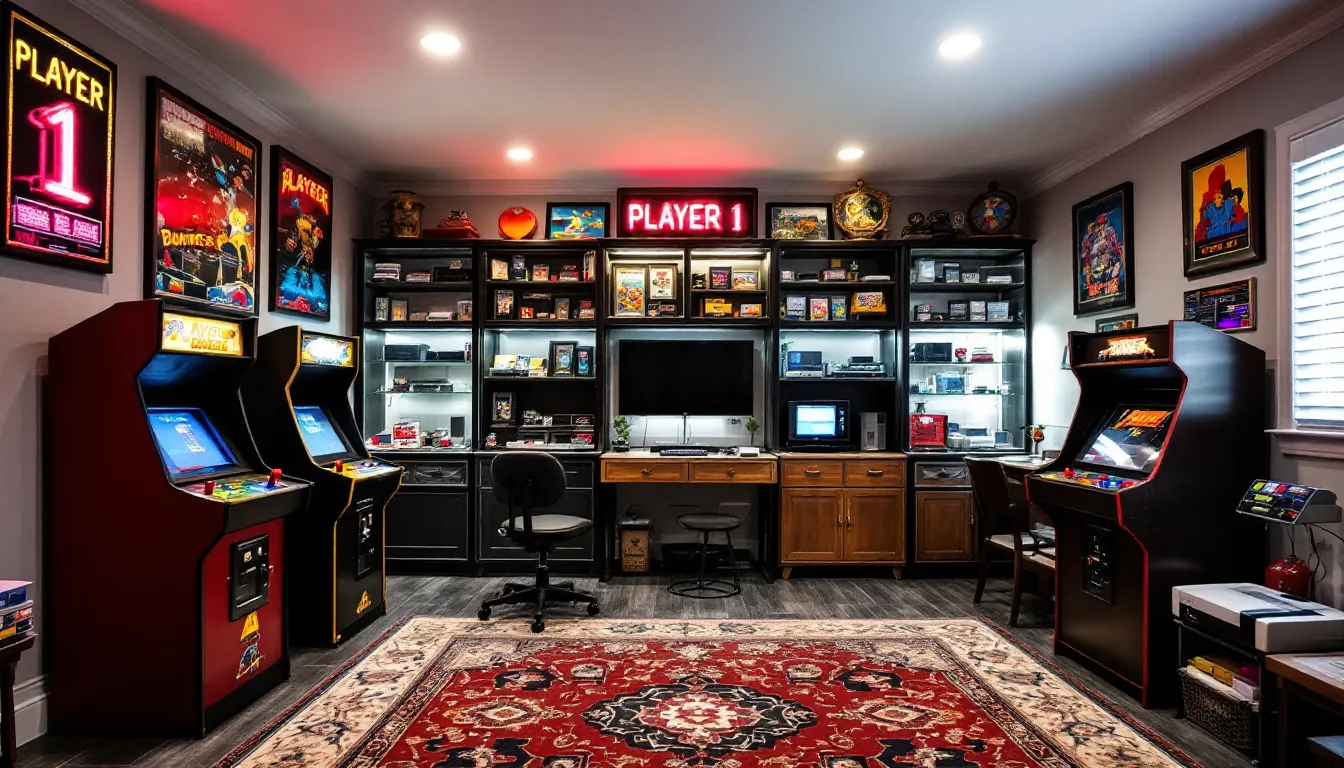

Whether you’re a seasoned gamer who grew up blowing into NES cartridges or someone discovering classic games for the first time, retro gaming decor has become the ultimate way to celebrate gaming history. A retro gaming room isn’t just about aesthetics, it’s about creating a space that captures the magic of gaming’s golden age while serving as a functional setup for modern play. The nostalgia hits different when you’re surrounded by iconic cabinets, vintage posters, and authentic memorabilia. In 2026, retro gaming decor has evolved from a niche hobby into a mainstream design movement, with gamers investing in everything from restored arcade machines to meticulously curated collections. This guide will walk you through creating an authentic, functional retro gaming room that feels both timeless and intentional.
Key Takeaways
- Retro gaming decor transforms functional spaces into immersive museums that celebrate gaming history while providing focused, distraction-free play environments away from modern algorithms and monetization.
- Essential retro gaming decor elements include original consoles, arcade machines, vintage posters, period-appropriate furniture, and authentic neon lighting—each contributing to visual authenticity and emotional resonance.
- Choose a cohesive aesthetic by committing to one era (8-bit, 16-bit, or arcade cabinet aesthetics) and building your color scheme and hardware displays around that primary theme to avoid visual chaos.
- Budget-friendly retro gaming decor is achievable through DIY projects, thrift stores, estate sales, and community forums—authentic pieces require patience and research, not expensive collector’s markets.
- Prioritize functionality and comfort over pure aesthetics: ergonomic seating, proper cable management, warm layered lighting, and ventilation ensure your retro gaming room is both beautiful and genuinely usable.
- Authenticity in retro gaming decor comes from passion and intentional curation, not perfection—build your collection gradually with pieces that genuinely excite you rather than impulse purchases.
Why Retro Gaming Decor Matters to Modern Gamers
Retro gaming decor serves a purpose beyond mere decoration. It’s about anchoring yourself in gaming history while creating an environment that triggers the emotional resonance of games that defined entire generations. Modern gaming prioritizes visual fidelity and cutting-edge performance, but retro gaming reminds us that gameplay, ingenuity, and storytelling were what made classics timeless.
A well-designed retro gaming room does something psychological: it removes you from the constant noise of contemporary gaming discourse. When you’re sitting in front of a CRT monitor with actual arcade hardware, the mechanics of the game become the focus. There’s no algorithm feeding you recommended content, no battle pass timers, just you and the game.
Beyond the personal appeal, retro gaming has become a legitimate way to preserve gaming history. Official re-releases and emulation communities have democratized access to thousands of games, but there’s something irreplaceable about original hardware. Your retro gaming room becomes a museum of sorts, documenting the evolution of interactive entertainment. It’s also a conversation starter. Visitors immediately recognize iconic imagery, and the collection itself sparks memories and stories about gaming’s impact on culture.
For competitive gamers, there’s another angle: retro games taught fundamentals. Games like Street Fighter II, Sonic the Hedgehog, and Mega Man demanded precision, timing, and pattern recognition. Surrounding yourself with reminders of these titles keeps those foundational principles front and center, even when you’re grinding through modern esports titles.
Essential Retro Gaming Decor Elements
Classic Gaming Consoles and Arcade Machines
The centerpiece of any retro gaming room is the hardware. Original consoles, NES, SNES, Genesis, Atari 2600, and Commodore 64, aren’t just functional: they’re design statements. These devices have iconic silhouettes that are instantly recognizable, and displaying them on shelves or mounting them on walls adds authenticity that no replica can match.
If you’re committing to a serious retro gaming room, arcade cabinets are the gold standard. Whether it’s a full-size stand-up cabinet or a cocktail table arcade, these machines command attention. But, authentic cabinets are expensive and require maintenance. Modern alternatives like mini retro gaming consoles offer a budget-friendly way to capture the arcade aesthetic with pre-loaded classic games. Multi-arcade machines (cabinets with 100+ games) have become increasingly sophisticated, with switchable artwork and proper CRT simulation to match the original display experience.
Console condition matters. Yellowed plastic tells a story, but if you’re creating a cohesive aesthetic, you might want to refurbish or recap aging hardware. Recapping (replacing deteriorated capacitors) extends console lifespan and prevents electrical failures. Display your consoles horizontally or vertically, whatever fits your space, but consider cable management. Exposed wires kill the vibe.
Vintage Posters, Art, and Wall Décor
Walls are your canvas for retro gaming decor narrative. Original arcade game posters are the most authentic choice but come with collector’s prices. Reproductions of classic game cover art, arcade marquees, and promotional materials offer the visual impact at a fraction of the cost.
Think strategically about placement. A single large poster of a game you love makes a stronger statement than scattering small prints everywhere. Classic choices include the original Street Fighter II artwork, Donkey Kong promotional material, and Ms. Pac-Man imagery. Modern artists have also created original retro-inspired artwork that captures the aesthetic without copying directly.
Frame your posters. It elevates the presentation from “dorm room” to “curated collection.” Glass frames protect against dust and fading, while mats add visual breathing room. Consider color-coordinating frames with your wall color scheme, black frames work with nearly everything, but metallic finishes can feel dated.
Iconic Gaming Furniture and Seating
You can’t build a functional retro gaming room without addressing seating and workspace. Arcade stools are compact and thematically appropriate, but they’re not ideal for long gaming sessions. Original arcade game cabinets come with built-in seating, which is perfect for fighting games and shoot-em-ups but impractical for console gaming at home.
Vintage office chairs from the 80s and 90s fit the aesthetic. Hunt for genuine period pieces at thrift stores or estate sales, the wood and mesh designs feel authentically retro without looking like a parody. If new furniture fits your budget better, companies now produce “retro gaming chairs” with 80s and 90s design language. Look for ones with solid build quality and proper lumbar support: you’ll be sitting here for hours.
Storage is equally important. Vintage media cabinets, shelving units, and glass display cases organize your collection while contributing to the visual theme. Metal shelving evokes an arcade or warehouse feel, while wood furniture softens the space. Game storage should prioritize organization, alphabetical, by console, or by genre, whatever system lets you actually find games.
Retro Lighting and Neon Accents
Lighting transforms a retro gaming room from “looks nice” to “feels authentic.” Harsh overhead fluorescents? No. That kills the mood immediately. Incorporate multiple light sources: table lamps with warm bulbs, accent lighting behind shelves, and if you’re committed, neon signs.
Neon is the signature element of 80s and arcade aesthetic. A classic “ARCADE” or “PLAYER 1” neon sign becomes an instant focal point. LED neon alternatives (safer, cheaper, lower electricity) are nearly indistinguishable from real neon and won’t heat up your space. Neon in retro gaming decor should feel earned, one or two statement pieces, not a nightclub vibe.
Backlight your display shelves with warm white or RGB LED strips. This highlights your collection while creating ambient lighting. CRT monitors cast their own soft glow, which naturally complements period-appropriate warm lighting. Avoid cool white/blue lighting: it contradicts the warm, inviting feel you’re building. Color-shifting smart bulbs let you adjust mood without permanent installation, though they can feel gimmicky if you’re going for authenticity.
Styling Your Space: Color Schemes and Themes
Classic 8-Bit and 16-Bit Aesthetics
The 8-bit and 16-bit eras define retro gaming visually. Colors were bold and limited: primary reds, deep blues, bright yellows, and blacks. These weren’t subtle design choices, they were necessities of hardware constraints that became iconic.
For an 8-bit theme, consider a color palette of primary colors with black accents. This works especially well if you’re focusing on NES, Master System, or Commodore 64 aesthetics. Walls could stay neutral (light gray or off-white) to avoid visual overload, letting your posters and hardware pop. Accent walls work too, imagine a deep blue or red wall dedicated to your primary display area.
16-bit aesthetics allow slightly more nuance. Games like Super Metroid, Final Fantasy III, and Sonic the Hedgehog introduced richer color palettes. Think teal, magenta, and neon greens combined with darker neutrals. This era also introduced the “vaporwave” aesthetic, which has become trendy in retro gaming room design. Vaporwave incorporates pastel pinks, purples, and blues with palm tree imagery and classical sculptures, it’s retro-futuristic rather than authentic, but it captures the “future as imagined in the 80s” vibe.
Stick to one era aesthetically. Mixing 8-bit color theory with arcade cabinet neon with 16-bit pastels looks confused. Choose your era, commit to it, and let your hardware and artwork reinforce that choice.
Arcade Cabinet Color Palettes
Arcade machines communicated through color. Bright, eye-catching hues were designed to grab attention on a crowded arcade floor. Think Pac-Man’s vivid yellow and blue, Street Fighter II’s bold red and blue, Donkey Kong’s primary color explosion.
If you’re building around an arcade aesthetic, your walls should support these bright accent colors. A white or light gray base lets arcade cabinets and marquees dominate visually. Brightly painted trim or accent walls in arcade-inspired colors (hot pink, electric blue, neon orange) can work if executed carefully. The key is restraint, use accent colors strategically, not everywhere.
Carpeting and flooring matter. Arcade cabinets were set on dark, practical floors (often black or dark gray concrete or linoleum). If you’re replacing carpet, consider darker tones or actual commercial-grade flooring. It grounds the space and makes cabinet displays more visually prominent.
Retro Console-Inspired Themes
Each console generation had visual and design signatures. SNES had a sleek, curved design in blacks and purples. Genesis was angular and red-heavy. Atari was wood grain and beige. PlayStation introduced a more corporate, dark aesthetic. You can build an entire room theme around a single console family.
For a PlayStation-inspired room, incorporate metallic grays, blacks, and the iconic triangle, circle, X, square icon colors (blue, red, pink, green). The aesthetic is less retro candy and more cyberpunk-adjacent. This theme allows for darker walls and more modern accent pieces without breaking cohesion.
Nintendo themes lean into that character-driven, playful aesthetic. Mario, Zelda, and Donkey Kong imagery naturally incorporates reds, greens, and golds. These color-forward themes create a more vibrant, energetic space, the exact opposite of a moody arcade cabinet setup.
Choose the console family that resonates with you personally. Your childhood console, your favorite game, or the hardware that genuinely excites you should be the anchor. The theme flows naturally from that choice.
Budget-Friendly Tips for Building Your Retro Gaming Setup
DIY Decor Projects and Customization
Authentic retro gaming decor doesn’t require blank checks. DIY projects stretch your budget while adding personal touches that store-bought decor can’t match.
Custom artwork: Tools like Canva and simple graphic design software let you create custom prints of your favorite games. Print them on a decent home printer or send files to local print shops for poster-sized outputs. Costs run $5–15 per print versus $30+ for official reproductions.
Hand-painted signs: A plywood “ARCADE” or “PLAYER 1” sign hand-painted in bright colors costs materials (paint, brushes, wood) under $20 and becomes a statement piece. Stencils make lettering foolproof. Even imperfect hand-painted work reads as authentic and intentional, it’s not mass-produced.
Cabinet artwork modification: If you own arcade machines, custom side art (artwork on the cabinet sides) from digital artists can be printed and adhered. This lets you customize machines without permanent modification. Community forums often have fan-created artwork available.
Shadow boxes for collectibles: Mount small figurines, game cartridges, or controllers in shadow boxes. These are cheap to assemble (pre-made boxes run $10–20) and create visual interest on shelves without dedicated display furniture.
Cable management: Fabric cable wraps, color-coded ties, and organized routing costs almost nothing but transforms visual chaos. Hidden cables and organized routing elevate the entire room.
Finding Authentic Vintage Pieces
Authentic vintage isn’t expensive, it just requires patience and knowing where to look.
Thrift stores and estate sales: This is where serious collectors hunt. You’ll find original consoles, controllers, posters, and furniture at 10–20% of collector’s pricing. The catch is inconsistency and condition, you’re gambling on what’s available any given week.
Facebook Marketplace and Craigslist: Local sellers often underprice items because they’re motivated to move bulk inventory. You avoid shipping costs on heavy arcade machines and consoles. Meet in person, inspect items, negotiate.
eBay and specialist online retailers: Prices here are higher (the market’s corrected), but inventory is consistent and authenticated. It’s your fallback when local hunting yields nothing.
Gaming conventions and retro expos: Regional gaming conventions often have vendor floors packed with retro dealers. Prices are competitive because of vendor density, and you can inspect items physically.
Community groups and forums: Subreddits like r/retrogaming and dedicated forum communities sometimes have buy/sell/trade sections with better prices than commercial channels because they’re peer-to-peer.
Know the condition terminology. “Yellowed” is normal aging, cosmetic, not functional. “Not working” might just mean a dead battery or caps lock issue, fixable for $10. “Authentic” versus “reproduction” matters, originals have resale value and historical significance. Start by exploring established retro gaming guides to understand what’s actually valuable before hunting.
Creating the Ultimate Gaming Atmosphere
Sound Systems and Audio for Immersion
Retro gaming decor is visual, but audio completes the immersion. Original arcade cabinets had surprisingly good sound systems, they needed to cut through arcade noise and pull in players. Your setup should prioritize quality audio.
For CRT-based setups (arcade cabinets, older consoles on tube TVs), vintage speakers or period-appropriate stereo systems add authenticity. Mid-century modern speaker design actually complements retro gaming rooms well. Hunt for working vintage speakers from the 80s and 90s: they’re often cheap because they’re heavy and less desirable than modern gear.
Modern gaming headphones work fine for personal play, but if you’re designing the room as a social space, a proper stereo system matters. Look for audio equipment reviews that discuss gaming-specific performance, sites like RTINGS provide detailed breakdowns of sound quality, frequency response, and clarity for various setups.
Computer and mobile gaming setups benefit from mechanical speakers with physical design details, think tube amplifiers or wooden speaker cabinets that match retro aesthetic. Quality doesn’t mean expensive: a $100–200 powered speaker setup beats cheap multimedia speakers.
Consider acoustics. Hard floors and bare walls create echo. Area rugs, curtains, and soft furnishings dampen sound reflections and create a more comfortable audio environment. Arcade cabinets naturally fill space with sound: supplementing with room treatment prevents harsh, muddy audio.
Display Organization and Game Collection Showcasing
Your game collection is part of the decor. How you organize and display it impacts the entire room’s visual hierarchy.
Physical collection display: Cartridges and cases look best in glass-fronted cabinets or on open shelving with good lighting. Spines facing outward (like a bookshelf) creates visual organization and makes finding games easy. Some collectors display cartridges at an angle on display stands, it’s less space-efficient but showcases artwork beautifully.
CRT display strategy: If you’re using original CRT monitors or tube TVs, position them as focal points. A wall-mounted arcade cabinet draws the eye naturally. Multiple CRTs create an arcade bank effect, iconic and functional.
Digital game libraries: PC and modern console libraries are invisible. Compensate with visual representation: printed cover art, fan art, or custom artwork representing your library. A “most-played games” wall featuring the games you actually boot up most frequently feels more personal than random titles.
Controller and accessory displays: Joysticks, light guns, and controllers are sculptural objects. Mount them on pegboards or display stands. Color-coded by console or type, they become both functional storage and visual interest. Professional gaming setup guides often showcase controller organization techniques adapted for retro hardware.
Label your collection. Whether it’s handwritten labels or printed tags, identifying games by console, genre, and year helps guests understand your organizational logic. It also prevents your prized collection from looking like random stuff on shelves.
Rotate displays seasonally or monthly. Pull out specific games, themed collections, or highlight lesser-known titles. This keeps the room fresh for yourself and makes return visits interesting for friends.
Common Mistakes to Avoid When Decorating
Mixing eras indiscriminately: Combining NES aesthetics, arcade cabinet styling, and PlayStation design language in one room creates visual chaos. It looks like someone bought random retro stuff without intention. Choose a primary era or console family and build coherently around it. Secondary pieces can accent, but the overall theme should be obvious.
Overcrowding: A retro gaming room isn’t a warehouse. Cramming every game, poster, and collectible into one space overwhelms the eye. White space and deliberate empty areas make focused displays more impactful. Curate. If you don’t genuinely love a piece, don’t display it.
Neglecting functionality: Pretty setups are useless if you can’t actually game comfortably. Prioritize ergonomics, proper seating height, arm rests, monitor positioning, before aesthetic flourishes. You’re spending hours here: it needs to function.
Poor cable management: Visible cables, tangled power cords, and messy connections instantly cheapen a space. Invest 30 minutes in organization. Color-coordinated cable wraps, hidden routing behind furniture, and labeled connections make the setup look intentional and professional.
Ignoring lighting: Bad lighting kills even well-curated spaces. Fluorescents are the enemy. Warm, layered lighting transforms mood. Test lighting before committing to expensive setups. LED strips and smart bulbs let you experiment cheaply.
Buying replicas without understanding originals: Modern “retro-style” furniture and decor often miss the mark. Before buying a reproduction cabinet or console, understand the original’s design language. Authentic reproductions feel right: cheap imitations feel cheap. Compare with references before purchasing.
Forgetting maintenance: Vintage electronics need care. Dust accumulates on CRTs and in console vents. Capacitors age and fail. If you’re displaying functional hardware, budget for maintenance. Recapping, fan replacement, and screen cleaning preserve your investment and keep things running reliably.
Fighting your actual preferences: If you genuinely prefer modern gaming peripherals but feel pressure to use vintage gear for authenticity, don’t. Hybrid setups, original hardware with modern quality-of-life improvements, work perfectly. Your gaming room should reflect your taste, not aesthetic purity.
Underestimating ventilation: Stacked electronics generate heat. Poor ventilation causes premature failure. Ensure air circulates around equipment. Don’t hide consoles in sealed cabinets: use open shelving with breathing room.
Conclusion
A retro gaming room isn’t about recreating the past, it’s about celebrating what made gaming matter and creating a space where those feelings resurface every time you enter. The technical specifications of a Mega Man game haven’t changed since 1987, but playing it surrounded by period-accurate hardware, artwork, and atmosphere transforms the experience.
Start small. Pick one console or game series you genuinely love. Display it well. Build outward from there. Your retro gaming room will evolve naturally as you discover pieces that speak to you. The most compelling collections are ones built with intention over time, not impulse purchases of whatever seems retro.
Remember: authenticity comes from passion, not perfection. A modest setup built thoughtfully beats an expensive room decorated without purpose. Your space should tell your gaming story, what games meant to you, what systems shaped your experience, what visual language gets you excited about gaming again.
The 2026 retro gaming community isn’t nostalgia for its own sake. It’s recognition that games from decades past remain mechanically sound, artistically valuable, and genuinely fun. Your retro gaming room is the physical manifestation of that belief. Make it yours.
