
Rip and ship gaming has become the defining playstyle for competitive players who want to win games decisively. It’s aggressive, it’s bold, and when executed properly, it’s nearly unstoppable. Whether you’re grinding ranked matches, competing in tournaments, or just tired of playing passively, understanding the mechanics of rip and ship tactics can fundamentally change how you approach every game. This guide breaks down what makes aggressive play effective, which games reward it most, and exactly how to build the skills and setup needed to dominate at the highest levels in 2026.
Key Takeaways
- Rip and ship gaming is an aggressive, tempo-controlling playstyle that forces opponents into reactive patterns, providing information and psychological advantages in competitive matches.
- Success with rip and ship tactics requires three core skills: snap decision-making under 200ms, extreme map awareness with constant cooldown tracking, and efficient resource management to maximize every ability and economic advantage.
- Competitive games rewarding aggressive play include FPS titles like Valorant and Counter-Strike 2, MOBAs like League of Legends, and fighting games—all where tempo control and proactive engagement win matches consistently.
- Pro players execute rip and ship gaming through calculated risk, not recklessness—maintaining teammate proximity, establishing retreat routes, and respecting enemy cooldowns separates dominant pros from hardstuck players.
- Equipment optimization directly impacts rip and ship execution: 240Hz+ monitors, low-latency peripherals, and custom sensitivity settings translate intentions into millisecond-faster in-game reactions.
- Deliberate improvement requires combining ranked grinding with aim training drills, frame-by-frame replay analysis, and tournament observation to accelerate skill development beyond solo queue limitations.
What Is Rip And Ship Gaming?
Core Mechanics And Gameplay Style
Rip and ship gaming is a fast, aggressive playstyle centered on quick engagements, high-risk plays, and immediate decisiveness. The term “rip” refers to committing to an action with full confidence, initiating a fight, making a play, or pushing an objective, while “ship” means fully committing to that decision without hesitation or second-guessing. There’s no wavering, no backing off halfway through.
In practical terms, this means:
- Initiating fights on your terms, not waiting for enemies to dictate engagement
- Committing fully to rotations and rotations, even when map control is uncertain
- Making split-second decisions without extended deliberation
- Playing with information asymmetry, moving before full enemy positions are known
- Using momentum as a weapon, where each victory builds pressure for the next engagement
Unlike passive play, which relies on setup, superior positioning, and waiting for mistakes, rip and ship capitalizes on psychological pressure and tempo control. A rip and ship player doesn’t farm kills in a side lane, they find enemies, engage immediately, and either eliminate them or reset and re-engage. The goal is to consistently create situations where the enemy team is reacting to your plays, not the other way around.
This playstyle isn’t reckless chaos. High-level rip and ship requires knowledge of your character’s capabilities, understanding win conditions for each matchup, and knowing exactly how much risk is acceptable in any given moment. You’re not playing with your eyes closed: you’re playing with your foot on the accelerator.
The Competitive Edge In Modern Gaming
In 2026, the competitive landscape rewards aggression more than it ever has. Patch cycles are faster, balance changes come quarterly, and the meta shifts constantly. Passive, defensive playstyles are increasingly predictable and punishable. Teams and players that control tempo win games.
Rip and ship gaming provides several competitive advantages:
Information advantage: By initiating fights, you force the enemy team to react. You see their rotations, their positioning, and their resource allocation. They’re playing catch-up.
Psychological pressure: Aggressive teams feel confident: defensive teams feel threatened. This mental edge translates directly to better decision-making and fewer hesitation moments.
Resource efficiency: In games with limited economy or cooldowns, controlling when fights happen means controlling when your resources are spent. Aggressive teams dictate resource timing: reactive teams waste resources defending.
Error amplification: When you’re constantly creating situations, enemies make more mistakes trying to respond. One panic rotate, one missed shot, one split rotation becomes a game-deciding moment.
In competitive shooters like Counter-Strike 2, having one team always attacking and one always defending creates inherent advantages for the aggressor. In MOBAs, a team that secures early kills gains exponential gold and experience advantages. In fighting games, maintaining offensive pressure forces opponents into defensive patterns where they’re more likely to make reads incorrectly.
Why Rip And Ship Strategy Matters
Tournament And Ranked Play Success
Tournament formats have evolved to favor teams and players that can execute rip and ship tactics consistently. Best-of-three series, where momentum swings are critical, reward aggression. A team that wins early rounds through aggressive plays builds confidence and map control for subsequent rounds. A team that plays passively and loses early momentum struggles to regain initiative.
In ranked play across every major competitive title, climbing requires positive win rates. Passive playstyles might farm CS or stay alive, but they don’t consistently close games. Aggressive players generate kill opportunities, secure objectives faster, and create the chaos where errors happen more frequently, usually on the enemy team.
Top-500 players in titles like Valorant, League of Legends, and Apex Legends share one common trait: they’re willing to commit to plays that lower-ranked players consider “too risky.” The difference isn’t that they’re actually taking more risk, it’s that they understand win conditions so thoroughly that what looks reckless to lower ranks is calculated aggression to pros.
Tournament organizers also recognize this. Matches featuring aggressive teams are more exciting for spectators. Passive farming creates dull matches where nothing happens for five minutes. This creates market incentives for aggressive playstyles to gain sponsorships, streaming revenue, and esports opportunities.
Psychological Benefits Of Aggressive Gameplay
Beyond mechanical advantages, rip and ship psychology shapes how you perform under pressure. Aggressive players develop confidence in their abilities because they’re constantly testing themselves against real opposition. There’s no “what if I had fought?”, you already did, and you either won or learned from the loss.
This builds resilience. When you’ve won fifty fights through sheer aggression, losing one doesn’t shake your confidence. You reset and execute the same gameplan. Passive players, meanwhile, internalize losses differently. They wonder if they positioned wrong, rotated wrong, or missed a crucial detail. The ambiguity creates doubt.
Aggressive play also reduces decision fatigue. Instead of constantly evaluating whether it’s time to fight, you’ve already made the meta-decision: “I’m fighting.” This frees cognitive resources for mechanical execution and tactical adjustment. You’re not asking if you should fight, you’re asking how to win the fight you’ve committed to.
For stream audiences and community building, aggressive players are also more entertaining to watch. Highlight reels feature aggression, not 15-minute team rotations. This isn’t vanity, it directly impacts streaming revenue, community growth, and sponsorship opportunities.
Essential Skills For Rip And Ship Players
Quick Decision-Making And Reaction Time
The foundation of effective rip and ship play is snap decision-making. You need to process visual information, evaluate your options, and commit to an action in under 200 milliseconds. This isn’t a learnable skill in the traditional sense, it’s a trained reflex that develops through thousands of repetitions.
Reaction time in competitive gaming averages 100-150ms for professional players. Rip and ship execution demands the faster end of that spectrum. But, raw reaction speed isn’t enough. Professional players also have predictive reaction, they anticipate enemy movements and pre-aim or pre-rotate before the enemy even commits.
To develop this:
- Play aim trainers daily (5-15 minutes). Titles like Aim Lab or KovakFPS build consistent muscle memory for rapid target acquisition
- Play deathmatch or 1v1 modes exclusively for 1-2 weeks when focusing on raw mechanics
- Review your footage frame-by-frame to identify micro-hesitations where you delayed a decision
- Practice commit drills: Set a timer, play a round, and force yourself to make decisions within 2 seconds of seeing information
Mental fatigue is also critical. Your decision speed degrades after 4-5 hours of play. Tournament players rotate in shifts specifically to maintain maximum decision velocity. If you’re grinding ranked, stop when you notice increased hesitation, that’s your signal that your decision speed is declining.
Map Awareness And Positioning
Rip and ship play requires extreme map awareness. You’re constantly moving into fights, which means you need to know enemy rotations, cooldowns, and positioning before committing. Without this information, aggression becomes feeding.
Map awareness in a rip and ship context means:
- Constant minimap scanning: Glance every 1-2 seconds. Missing a rotation is a kill-tier mistake
- Sound cue evaluation: Footsteps, ability usage, and reload sounds tell you where enemies are without seeing them
- Cooldown tracking: Knowing which enemies have used ults/abilities in the last 30 seconds determines how hard you can commit
- Positional expectations: Understanding where enemies should be based on game state
Positioning for rip and ship is counterintuitive. Instead of positioning for safety, you position for coverage and aggressive rotation. You want high-ground or corners that let you disengage if the fight goes south, but you’re not camping those spots, you’re using them as launch points.
In FPS games, this means holding aggressive angles where you see enemies first. In MOBAs, it means taking jungle camps and ward positions that let you collapse on isolated enemies. In fighting games, it means controlling mid-screen where you can pressure or escape.
One core principle: you never position defensively while rip and shipping. Defensive positioning makes fighting inefficient. You’ll always be retreating, always at a range disadvantage. Aggressive positioning puts the enemy in reaction mode.
Resource Management Under Pressure
Rip and ship tactics demand tight resource management. You’re spending cooldowns, abilities, and economy on aggressive plays, which means you can’t afford waste or miscalculation.
Resource types vary by game:
- Cooldowns: Ults, abilities, and resets. In Valorant, using your ability early in a round is a resource burn that affects your buying power later. In League, burning your ultimate on a guaranteed kill is resource efficient: burning it on a 50/50 fight is resource wasteful
- Economy: In games with purchasing systems, aggressive early plays generate economy through kills, allowing better weapon buys and equipment
- Positioning cooldowns: In MMOs or survival games, you might have limited repositioning tools. Using them efficiently means not blowing an escape route on a non-lethal threat
- Stamina and health: Your health pool is a resource. Every point of damage taken reduces your margin of safety on the next fight
Pro teams track these resources obsessively. In CS2, teams have designated players who track economy across five players and determine which rounds can afford aggressive buys. In League, junglers understand that ganking bot lane at 5:30 with no ult generates less value than waiting 10 seconds for their cooldown to come back.
The key skill: evaluate the reward-to-resource ratio before committing. A guaranteed double kill for your ultimate cooldown is efficient. A possible single kill for your ultimate cooldown is not. This calculation happens in milliseconds for experienced players.
Games That Thrive With Rip And Ship Tactics
First-Person Shooters And Battle Royales
FPS games are the natural home for rip and ship tactics. Games like Valorant, Counter-Strike 2, and Call of Duty reward aggressive positioning and quick engagements. In competitive FPS, the team that controls early positioning controls the round. Teams that play passively in pistol rounds almost always lose the economic advantage.
Battle royales like Apex Legends and Warzone 2 have evolved to heavily reward aggressive play. The ring forces engagement, and teams that proactively secure position control and eliminate competitors win more frequently than teams that loot quietly and avoid fights. Aggressive rotations that secure high-value loot and positioning ahead of rotations generate exponential advantages.
In Valorant specifically, the meta has shifted toward aggressive initiator-based play. Teams running Breach, Gekko, or Kay/O compositions force enemy reactions. Defensive utility is still important, but teams that win at the highest levels are those that dictate round direction through aggression.
FPS mechanics directly enable rip and ship: low time-to-kill (TTK) values mean fights are decided in 100-300ms. There’s no time for extended duels, you either commit to the fight or you lose. This creates natural incentives for aggressive play. Hesitation is death.
MOBA And Real-Time Strategy Games
MOBAs like League of Legends and Dota 2 reward aggressive team compositions and playmaking. Professional teams that consistently win games are those that generate more fights on favorable terms. Passive scaling strategies exist, but they’re reactionary, they only work if the enemy team doesn’t contest your farm.
Meta shifts in MOBAs follow aggression trends. When utility-based initiators are strong (like Alistar or Amumu support), aggressive team fighting dominates. When scaling champions dominate the meta, play slows but aggression still wins games, it’s just higher-risk and requires better execution.
Real-time strategy games like StarCraft 2 reward aggression differently. Early aggression secures map control, which generates resource advantages through superior expansion opportunities. The player that attacks first doesn’t necessarily win the fight, but they dictate the game’s pace. Passive players are always reacting to attacks.
In both genres, the principle is identical: control the game’s rhythm through proactive play.
Fighting Games And Action Titles
Fighting games are pure rip and ship environments. There’s no passive farming, no territory control, there’s only offense and defense. The player that maintains offensive pressure forces the opponent into reactive patterns, which are inherently less effective than proactive patterns.
Top fighting game players are aggressive by nature. They pressure constantly, block-string relentlessly, and force opponents to either execute perfect defense or lose. Defensive play in fighting games is a temporary state, you’re always looking for openings to transition to offense.
Action titles like Devil May Cry or Elden PvP reward aggressive play similarly. Offense generates style points, heals, or other mechanical benefits. Passive play is punished. This creates direct incentives for rip and ship tactics.
Training Methods To Improve Your Game
Practice Drills For Speed And Accuracy
Rip and ship execution requires drilling specific scenarios repeatedly until responses become automatic. The best training methods isolate individual components and drill them in high-rep, low-consequence environments.
Aim drills: Use Aim Lab or KovakFPS. Focus on tracking and flick exercises. These should be 5-10 minute sessions at the start of each gaming day. If your aim deteriorates throughout the day, you’re either fatiguing or your sensitivity is wrong.
Decision drills: Create custom game modes where you’re forced to make decisions repeatedly. For example, in Valorant, run custom rounds where you have 3 seconds to decide whether to buy or eco. In League, set a timer for early game skirmishes and force yourself to commit to a play within that window.
Positioning drills: Run aim trainer scenarios where positioning is pre-determined, forcing you to practice angles and cover usage. In fighting games, practice specific pressure strings until execution is flawless.
Reaction tests: Websites like Human Benchmark or similar services provide millisecond-level reaction time feedback. Average competitive players score 150-180ms. Professionals average 130-150ms. If you’re consistently over 200ms, focus on reaction drills before competitive play.
The key principle: drills isolate variables. A deathmatch teaches you aim, positioning, and decision-making simultaneously, which makes feedback harder to process. A drill that isolates one variable lets you optimize that specific component.
Reviewing Gameplay And Learning From Mistakes
Breakfast clips and replays are where actual improvement happens. Many players grind hours but never review footage, meaning they repeat the same mistakes indefinitely.
Structured review process:
- Record every competitive session (ranked, tournaments, scrims)
- Flag moments where you died or made poor decisions immediately after the session
- Review flagged moments at normal speed first, then frame-by-frame
- Identify the root cause: Was it mechanical (whiffed shot), tactical (bad positioning), or psychological (panic decision)?
- Drill the specific failure point in your next practice session
- Re-watch the same moment after drilling to see the difference
Pro teams have dedicated analysts who review footage and create tactical breakdowns. Solo players need to be their own analysts. The difference between hardstuck players and climbers often isn’t mechanical ability, it’s willingness to review and optimize based on evidence.
When reviewing rip and ship plays specifically, focus on:
- Decision velocity: Did you hesitate before committing? Where in the play?
- Information accuracy: Did you have map control before engaging, or did you guess?
- Resource efficiency: Could you have achieved the same result with fewer resources spent?
- Positioning quality: Would a different angle have improved your odds?
Streaming And Community Engagement
Streaming your gameplay creates accountability and exposes you to high-quality feedback. Top streamers improve faster because thousands of viewers spot mistakes instantly in chat.
Beyond improvement, streaming builds community and generates revenue. Aggressive, entertaining playstyles generate larger audiences than passive farming. If you’re grinding rip and ship tactics, streaming is a lever to monetize and grow simultaneously.
Community engagement matters, too. Discussing plays with high-level players, joining competitive communities, and participating in scrim culture expose you to perspectives beyond your own experience. Professional teams scrim constantly not just for practice, but for exposure to different tactical approaches.
Equipment And Settings Optimization
Monitor Refresh Rates And Input Lag
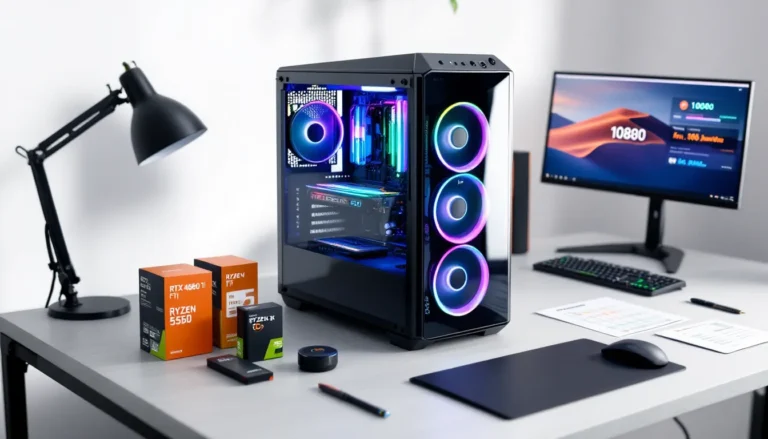
Hardware directly impacts rip and ship execution. The faster your monitor refreshes, the earlier you see enemy movement. Lower input lag means your inputs register faster. Both translate directly to better decision-making and faster reactions.
Monitor specifications for competitive play:
- Refresh rate: 144Hz minimum (competitive standard). 240Hz is industry standard for top players. 360Hz is luxury territory
- Response time: 1ms (gray-to-gray) is the target. Some monitors advertise misleading response times: check professional reviews
- Input lag: Total system lag (monitor + console/PC) should be under 50ms for competitive play. High-end gaming monitors achieve 10-20ms
- Panel type: IPS panels have better color accuracy but higher response times. TN panels are faster but have worse viewing angles. For competitive FPS, TN or fast IPS is standard
Gamers report that upgrading from 60Hz to 144Hz creates a tangible improvement in aim and reaction times. Going from 144Hz to 240Hz provides measurable improvement for top players. Beyond 240Hz, improvements are marginal unless you’re playing at 240+ FPS consistently.
Gaming hardware analysis on WCCFTech covers the latest GPU performance and monitor technologies relevant to high-refresh gaming. If you’re investing in new equipment, understanding the technical performance of components prevents overpaying for marketing hype.
Keyboard And Mouse Configuration
Peripheral settings dramatically impact rip and ship execution. Professional players spend hours optimizing sensitivity, button mapping, and hardware.
Mouse sensitivity settings:
- DPI: Professional players typically use 400-800 DPI
- In-game sensitivity: Varies by game (Valorant pros typically use 0.75-1.2, CS2 pros use 1.0-2.0). Lower sensitivity allows better precision: higher sensitivity enables faster rotations
- Mouse acceleration: Disable for competitive play. Acceleration creates inconsistent muscle memory
- Polling rate: 1000Hz (1ms response) is standard. Older mice at 125Hz create noticeable input delay
Button mapping:
- Primary fire: Left click (standard)
- ADS/Scope: Right click or mouse button (popular for shooters)
- Ability buttons: Mouse buttons 4-5 for frequently-used abilities, reducing finger strain and increasing speed
- Utility buttons: Keyboard-based, mapped within easy reach of WASD
Many pro players use extremely high DPI combined with low in-game sensitivity, which creates finer control. Others use low DPI and higher sensitivity. The key is consistency, once you find settings that feel natural, don’t change them frequently.
Controller Settings For Console Gaming
Console players have less hardware flexibility but can still optimize through configuration.
Sensitivity settings:
- Horizontal/Vertical sensitivity: 8-12 range is standard for rip and ship players. Lower values (5-7) improve precision: higher values (13+) improve rotation speed
- Aim assist: Console games typically include aim assist to compensate for controller limitations. Competitive players usually lower aim assist strength slightly to maintain control
- Dead zone: 0.05-0.10 is optimal. Higher dead zones reduce precision: lower dead zones increase stick drift sensitivity
- Trigger sensitivity: Set to maximum for faster ability activation
Button remapping:
- Bumper jumper layout: Maps jump to LB/L1, increasing movement fluidity. Essential for competitive play
- Default layout: Still used by some pros, but limits movement agility
- Custom layouts: Most pro players use either bumper jumper or custom layouts that map abilities to buttons, not sticks
Controller quality matters. Premium controllers with adjustable triggers and reduced stick drift significantly improve consistency. Budget controllers introduce inconsistency that directly impacts rip and ship execution.
Common Mistakes And How To Avoid Them
Overcommitting And Losing Map Control
The most frequent rip and ship mistake is committing to fights without maintaining map control. You engage, the enemy team collapses from multiple angles, and you’re surrounded.
Rip and ship isn’t suicide charging into 1v5s. It’s aggressive engagement within calculated parameters. The difference between a pro and a hardstuck player making the same initiation is that the pro maintains teammate proximity and map control.
How to avoid overcommitting:
- Check minimap before every engage: Is your team close enough to support? Are enemies in unexpected positions?
- Establish retreat routes: Before fighting, know your exit path. If the fight goes south, you should be able to disengage
- Respect cooldowns: If three enemies are missing and one just respawned with ultimate, you’re overextended. Back off
- Manage pacing: You don’t have to fight immediately. Rip and ship means aggression, not constant engagement. Sometimes waiting 5 seconds for your teammate to rotate is worth more than fighting now
- Use hard cover: Never engage in open space. Use terrain, buildings, or cover to create angles that favor you
One common frustration for rip and ship players: teammates don’t follow up. This creates the perception that aggression doesn’t work. In reality, your team simply didn’t commit to the aggression. Communication is essential. Call your intentions clearly: “Rotating bot, hard commit to this.”
Poor Communication With Teammates
Rip and ship tactics require synchronized aggression. If you’re committing while your team scales, you’re feeding.
Essential communication:
- Call your intention before committing: “I’m rotating bot, hard commit” gives teammates 2-3 seconds to prepare. “Rotating” without intent is vague
- Confirm teammate cooldowns: “Do you have your ult?” before hard engaging ensures your team is resourced appropriately
- Establish a scrim-team callout system: Terms like “hard push,” “slow rotate,” “stack,” or “contest” should have consistent meaning across your team
- Maintain consistent communication during engages: Callouts mid-fight (“two left,” “low health”) keep everyone synchronized
- Post-engage debrief: After failed fights, discuss what went wrong. Was the initiation bad, or did support not follow? Clarity prevents repeating mistakes
Many players focus so much on individual mechanics that they neglect team communication. In rip and ship contexts, communication is a mechanical skill. Teams with better callouts beat teams with better aimers.
Professional teams spend hours practicing callouts and communication protocols. Solo queue players often skip this entirely. If you’re grinding ranked with consistent teammates, implementing structured communication is an instant skill upgrade.
The Competitive Scene And Professional Play
Pro Players Who Dominate With Aggression
The most dominant professional players across games share rip and ship characteristics. In Valorant, players like TenZ (now with G2) built reputations on aggressive jett plays. In League, junglers like Karsa and Canyon control games through early aggression and ganking pressure. In Counter-Strike, s1mple and ZywOo combine aggressive positioning with mechanical precision.
These players aren’t successful because they’re reckless. They’re successful because they understand exactly when aggression has the highest value. TenZ doesn’t entry every round: he does so when his team is resourced and positioned to support him. Karsa doesn’t gank every lane: he ganks lanes where enemy cooldowns are unavailable.
Fresh competitive coverage on Game Rant’s gaming section provides analysis of professional matches and playstyles. Understanding how pro players execute rip and ship tactics, and crucially, when they dial it back, provides insight that solo queue grind can’t replicate.
Watching professional matches with this lens is educational. Notice how pros maintain positioning even during aggressive rotations. Notice how they track enemy cooldowns. Notice how their “aggression” is actually calculated risk with predetermined retreat paths.
Major Tournaments Featuring Rip And Ship Strategies
Tournament meta directly reflects the power of rip and ship tactics. Valorant Champions, League Worlds, and The International (Dota 2) all showcase teams that win through aggressive early play and tempo control.
Valorant Champions 2025 featured predominantly aggressive team compositions. Teams running initiator-heavy lineups won more rounds and advanced further. This wasn’t coincidence, it was meta evolution. The patch cycles leading up to the tournament buffed aggressive initiators, and teams adapted accordingly.
League Worlds similarly showcases aggressive playstyles. Early game advantages through successful ganks and skirmishes directly correlate with Worlds tournament success. Teams that can’t execute early aggression struggle in the tournament format.
Tournament formats themselves incentivize aggression. Best-of-three series where momentum matters heavily favor teams that maintain psychological pressure. A team that wins the first two maps through aggression often snowballs the mentality advantage into the third map.
For competitive players, tournament coverage is essential study material. Recent gaming coverage on NME includes tournament updates and analysis. Following professional play and understanding how teams execute rip and ship tactics at the highest level directly informs your own approach.
Notable 2026 tournaments already showcasing aggressive play include regional qualifying stages for both Valorant and League, where teams that establish early kills and map control significantly outperform passive alternatives.
Conclusion
Rip and ship gaming represents the modern competitive standard. Games that reward fast decision-making, aggressive positioning, and tempo control dominate the esports landscape in 2026. Whether you’re grinding ranked, competing in tournaments, or building an audience through streaming, mastering aggressive playstyles directly impacts your success.
The foundation is skill: mechanical precision, rapid decision-making, and accurate map awareness. The execution is discipline: committing fully while respecting calculated risk parameters. The environment is equipment: optimized settings and responsive hardware that let your intentions translate directly to in-game actions.
Improvement requires deliberate practice, honest review of failures, and exposure to high-level competition. Solo queue grinding alone generates limited growth. Combine ranked play with aim training, replay analysis, and tournament observation to accelerate progress.
Rip and ship gaming isn’t flashy for flashiness’s sake. It’s the most efficient playstyle available in competitive gaming because it dictates pace, creates information advantages, and forces opponents into reactive patterns where mistakes happen more frequently. Every game rewards this principle differently, but the core remains constant: control the tempo, and you control the match.